What did you learn from interpack, Dr. Lennart Ederleh?
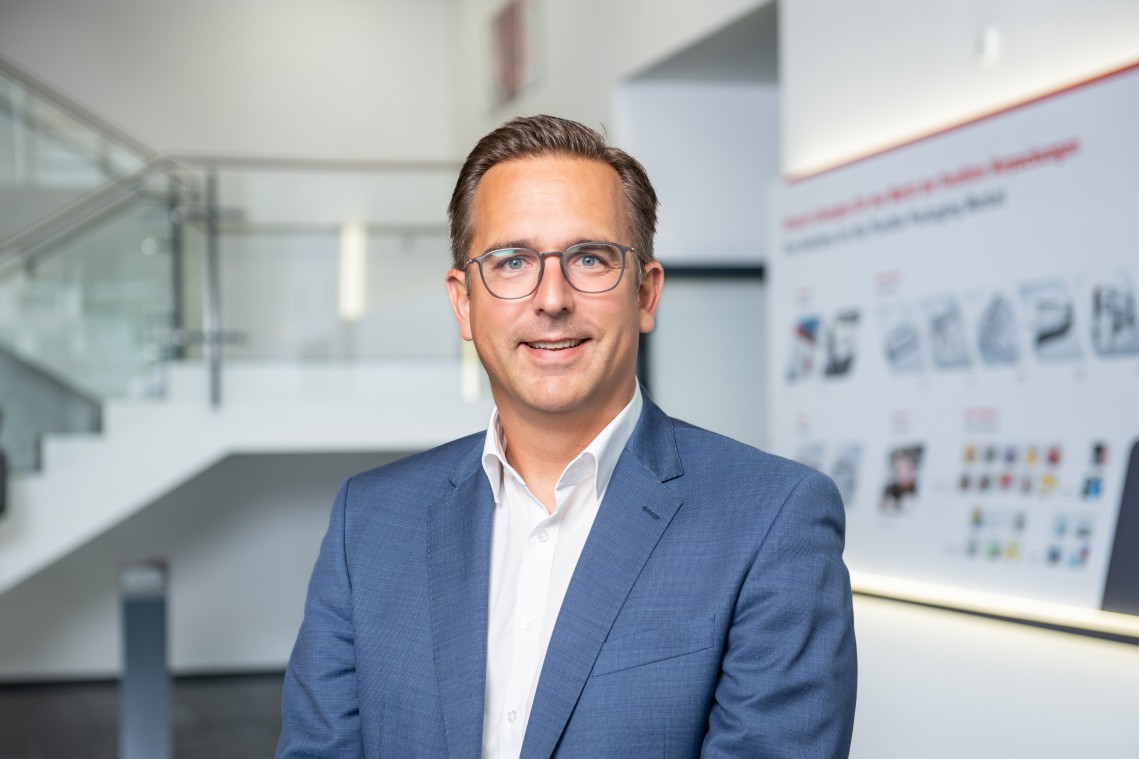
Dr. Lennart Ederleh, Director Technical Sales Extrusion
Hi Lennart, thank you for taking the time to look back at interpack and share your impressions with us. Let’s start with a few questions.
How was interpack, and what were your main observations?
From the many conversations during interpack, it became clear that the sustainable advancement of flexible packaging remains the defining topic across the industry.
Discussions focused in particular on design for recycling based on mono-material structures and the use of recycled content, especially in light of national and international regulatory requirements. At the same time, there is always the question of how to ensure efficient and economically viable production.
What also became evident is that, despite the growing visibility of mono-material and PCR solutions in the market, their commercialization still comes with significant challenges. These include process stability and consistent high quality to ensure an efficient production process and enable a stable downstream performance in printing and pouch making.
This is also reflected in the questions our customers bring to us. For example:
- Are my operators capable of running an MDO production process at maximum output?
- In the context of PCR processing: How can I ensure consistently high film quality despite fluctuations in PCR material quality?
- How can I ensure that my products also perform reliably in downstream processes such as printing or pouch making?
- Which production technology is the right choice for new developments: blown film or cast film? How to achieve the desired packaging properties while producing as cost-effectively as possible?
So the main challenge is process stability, product quality and profitability?
Yes, exactly and whether it's MDO or PCR, the ultimate goal is the same: to develop the right recipe and process that achieves the optimal balance between maximum output and film quality. So that despite regulations profitable business management is achievable.
Which role did the supermarket shelf on the interpack booth play in this regard?
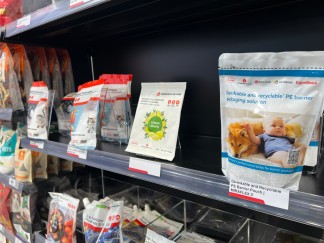
As facts often speak louder than words, we decided to demonstrate that this change towards sustainable packaging is not only about challenges and financial losses. The shelf at interpack was and is a positive sign to the industry. We showcased a collection of MDO-PE-based packaging solutions that our international customers already produce successfully and on an industrial scale. Meaning they are earning money with these products.
In addition, we presented sample applications developed together with partners. These show how packaging can meet regulatory requirements, work across the entire value chain, fulfill functional and optical expectations, and most importantly, be economically viable.
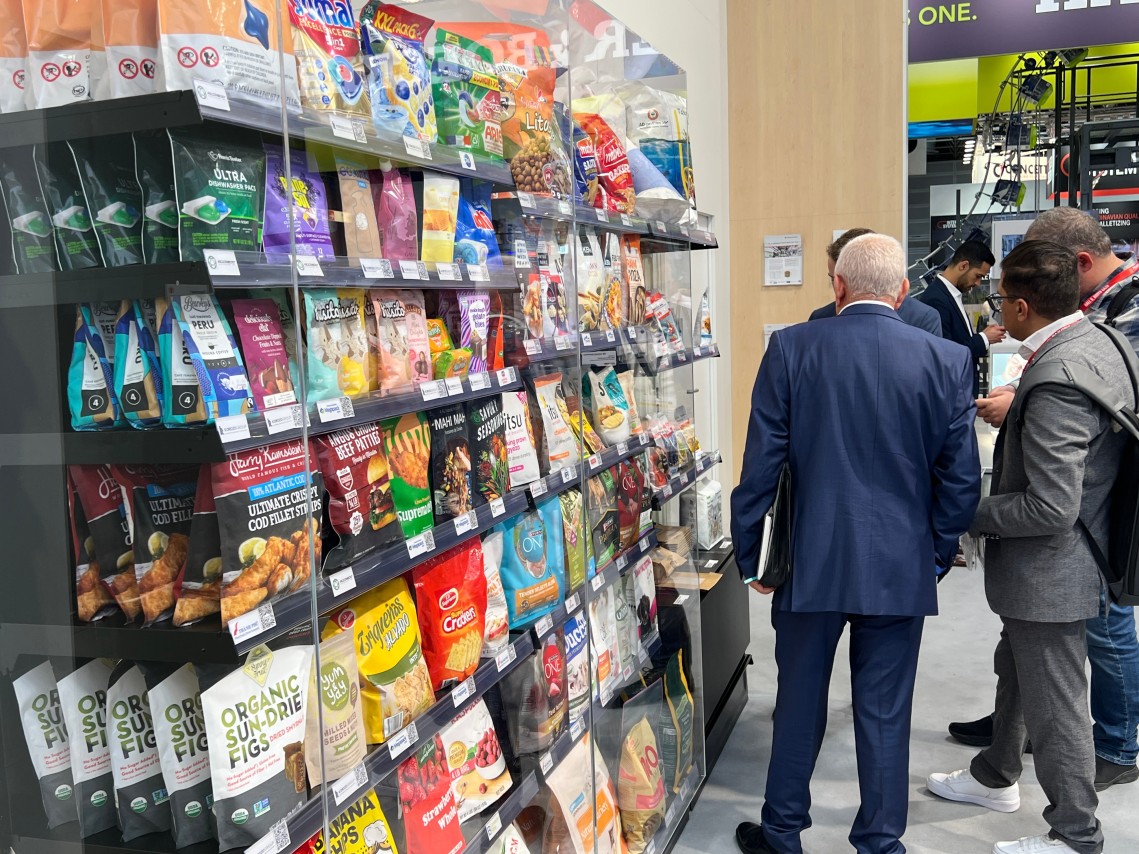
Supermarket shelf with real MDO-Packagings and product samples
Can you elaborate on this? Which industry challenges do these sample products address precisely?
Of course. There are several dimensions, but I’ll try to keep it simple.
The MDO-PE samples from our customers clearly demonstrate that mono-material solutions are commercially viable. In the past, MDO had the reputation of being difficult to handle - and that was true to some extent. Typical issues were reduced process stability, issues with reel quality and less efficiency due to increased edge trim. All this impacts the competitiveness of film production. Together with customers and our development team, we have spent a lot of effort in solving these real-life-challenges to enable our customers producing MDO film at industrial scale and under economic viable conditions. One outcome was the development of the Mini Nip Roller Technology. Thanks to a highly precise line pressure besides other advantages, we can ensure an MDO production with best-in-class profile consistency and planarity, resulting in excellent reel quality and less edge trim.
When it comes to PCR processing, the approach is different. As PCR quality can vary massively we see less reproducible processing, and more variation in film thickness, optics, and mechanical performance. These fluctuations can also show up in the final product - in tear strength, sealability, appearance, and overall consistency.
But there is no single setup that works for every application. That is why we are looking with our customers into their production: Where is the PCR coming from? What quality does it have? Which processing challenges does the specific material have? And what does the final film or package need to achieve? From there, we can define the right solution - for example the right extrusion screw design to optimize shear and reduce gels, or continuous screen changers to handle contamination more efficient.
At interpack, we showcased PCR sample solution such as an oil packaging with material savings (downgauging) and a high-performance stretch film, both very demanding applications for PCR.
What is the W&H approach to managing this change with customers?
First of all: every company is different and there is no one-size fits all approach. With our customers who already have mastered this change we gained a lot of know-how of the challenges in practice. The result can be seen in the supermarket shelf. When starting the process with a company its not about selling a new machine, its about looking into the customers business case and to understand their individual products and challenges. With our know how in blown and cast extrusion, printing and converting we do have a natural openness to our consulting approach which is a real advantage for our customers. Let´s be honest, we don´t need to find e.g. a blown film or PE solution, we can look into what makes the most sense for our customers. In our technical center we can then test the extrusion and literally next door also printing properties to test downstream processes. And this is how we are supporting our customers step-by step along their transformation journey.
Thank you Lennart, if you had to take 3 messages to the packaging industry, what would they be?
In summary, I would highlight these key messages:
- PPWR-compliant packaging is economically viable – our customers and the solutions we presented at interpack are clear proof of that.
- Those who want to lead the market need to act now – early movers already have a clear advantage.
- W&H has the experience and the technology to support this transformation – so let’s start the conversation.